

Have you ever thought about salt? Other than to shake it onto your food or your roads in winter, have you considered how many different ways salt is mentioned in the Bible? In my reading of the Gospel of Mark the other night, I ran across this passage:
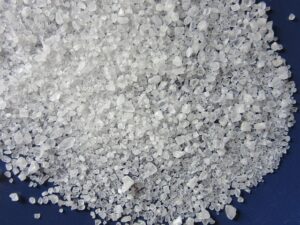 “For everyone will be salted with fire. Salt is good, but if the salt has lost its saltiness, how will you make it salty again? Have salt in yourselves, and be at peace with one another.”
Mark 9:49-50
Everyone? And what does it mean to be salted with fire?

In Leviticus, (Leviticus 2:13) the Israelites were told not to bring a grain offering with yeast or honey to be burned on the altar. They were to season the grain with salt. Then it could be a burnt offering, a pleasing aroma to the Lord. It was called the salt of the covenant with your God.

That doesn’t seem to be as clear, but God also made a covenant of salt with David, promising that his descendants would always sit on the throne of Israel. (2 Chronicles 13:5) Hmm…why a covenant of salt?
Jesus said, “Have salt in yourselves…” And in Matthew He said, “You are the salt of the earth, but if salt has lost its taste, how shall its saltiness be restored? It is no longer good for anything except to be thrown out and trampled under people’s feet.” (Matthew 5:13)

The covenants of salt are hard to understand, but even today “bread and salt between them” is a welcoming thing, a means to offer friendship or even protection. Salt made an agreement legally binding.

When Jesus said we were the salt of the earth, in part, He meant that our faith in Him allows us to help preserve what is good and pleasing to God on earth.
As for salt destroying vegetation…when a nation conquered another nation, they would destroy the people and burn the town and then salt the land so that nothing would grow there. So salt preserved what was good, like meat or in non food terms, it preserves the good in a society. But it can destroy what is not good. Could salting the earth be like destroying evil? I wonder…

This is what I found: “Natural salts (not iodized) are a common mineral that will never go bad.” Never go bad? Then why did Jesus say if salt loses its saltiness, how can it be made salty again? And it is useless, to be trampled on?
Maybe He said this with the knowledge that the people knew that salt couldn’t lose its saltiness. And if that’s true, and His followers are the salt of the earth, then can we lose our saltiness? We can lose our effectiveness. We can lose heart. We can doubt and lose faith. But ultimately, if we are His, we can’t lose these things permanently. The salt within us can’t lose its saltiness. But it can become ineffective.

Salt. I never thought of it as so potent and so important in Scripture. Or in our lives. But we need to remember that salt meant something to the ancient world of Jesus’ day and it hasn’t lost its importance in ours. We just need to understand it. Jesus wants His people to keep His covenant of faith in Him and have salt in themselves. This salt is what preserves truth and destroys evil wherever we find it.
~Selah

The Conversation
Morning☕️ thanks for “salt” comments, good to be reminded that we/His children are the Salt of the earth. Covenant/ salt being a preserver of Truth and how it enriches our personal relationship with the Lord…and His promise of eternal life!
Thanks, Julie. I pray we will always be people of the Truth of the Lord Jesus Christ.